

From Sensors to Intelligence: Building Connected Ecosystems That Scale
Sensor data only becomes intelligence when architecture enforces clean contracts across edge, connectivity, and cloud. Without that discipline, scale amplifies noise. This insight explores how to build connected ecosystems that remain accurate and actionable under growth.
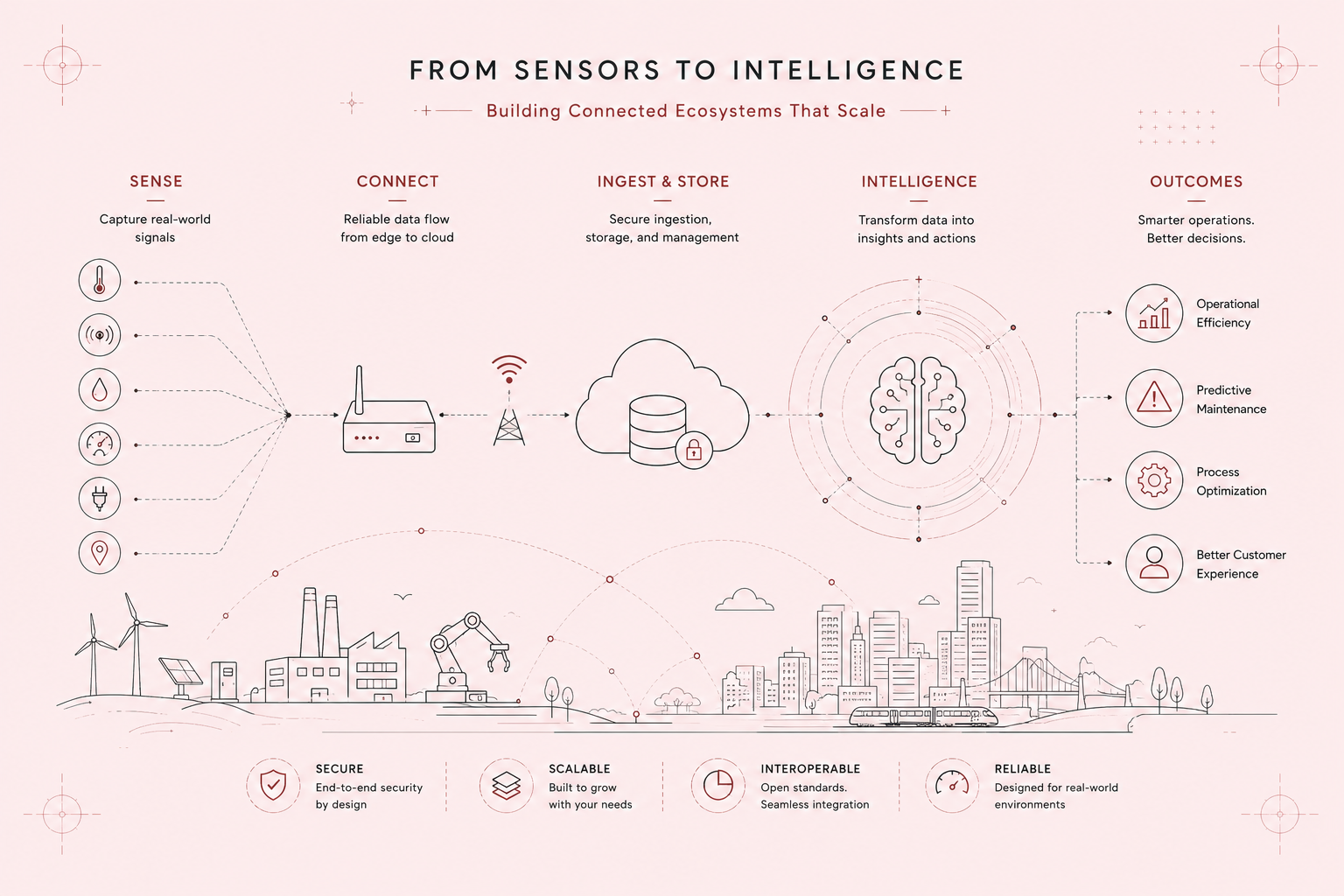
Sensor data is not intelligence. Intelligence emerges only when edge, connectivity, and cloud layers agree on meaning — and most ecosystems scale data volume long before they scale data trust.
Why This Matters
Scalable intelligence requires disciplined data architecture from the edge upward. Sensor output alone is not insight unless contracts, context, and quality controls are enforced.
Intelligence requires disciplined data architecture from the edge upward — sensor output alone is not insight.
The Problem Today
Teams often scale ingestion before stabilizing semantics. Data volume grows, but meaning and trust degrade as schema drift and timing inconsistencies propagate through the system.
Scaling ingestion before stabilizing semantics grows volume while degrading meaning and trust.
Where Systems Break
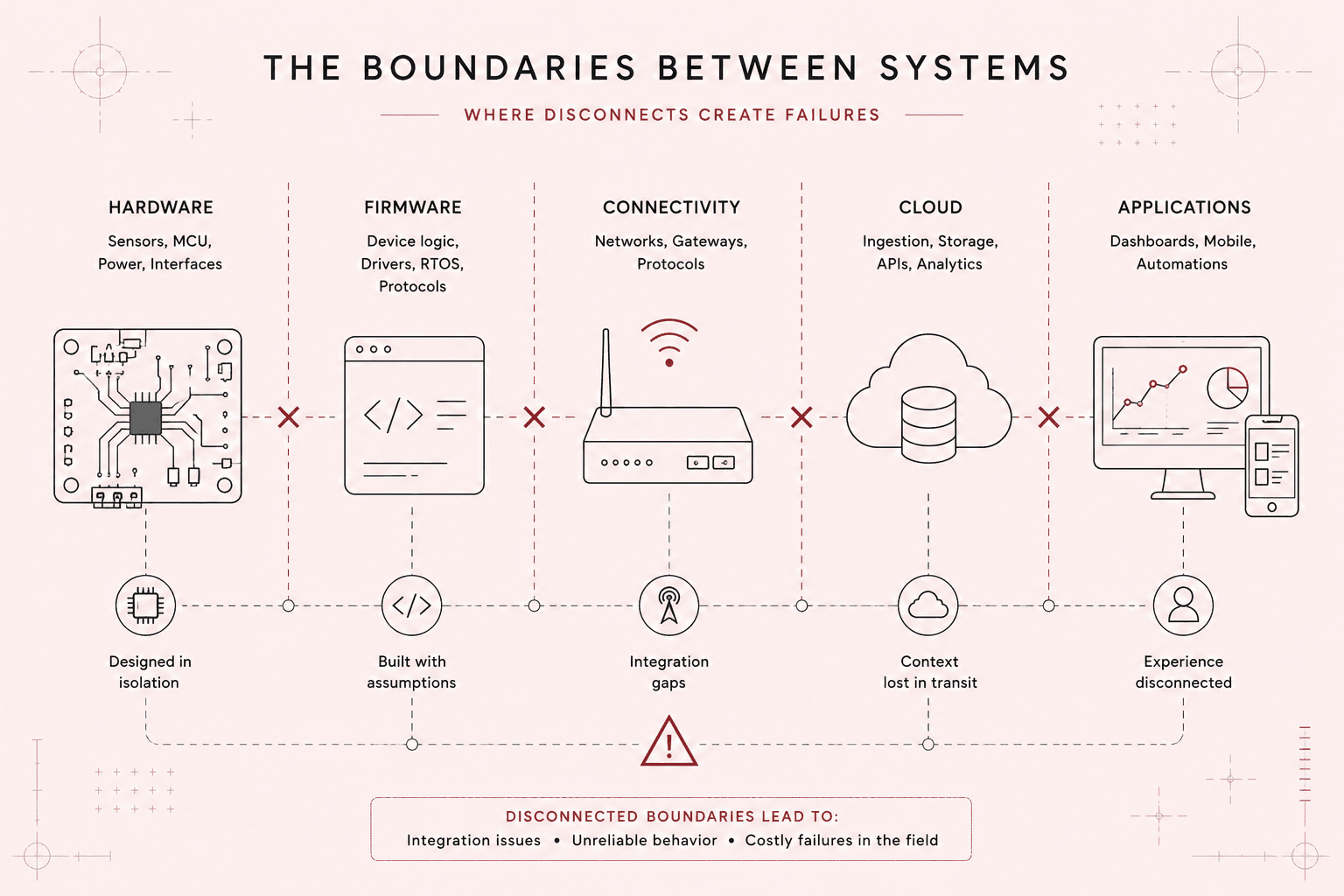
Edge preprocessing, gateway normalization, stream processing, and decision engines each alter data interpretation. Without coordinated design, downstream intelligence becomes brittle and misleading.
Edge preprocessing, gateway normalization, and stream processing each alter interpretation without coordinated design.
What Happens in the Field
In production this appears as noisy dashboards, low-confidence automation, and expensive manual intervention to reconcile device state with cloud analytics.
Noisy dashboards and low-confidence automation force expensive manual reconciliation between device and cloud state.
How Experienced Teams Think
Reliable ecosystems treat data quality as an engineering constraint. They version schemas, enforce observability for quality metrics, and design graceful degradation paths for partial data.
Data quality is an engineering constraint: versioned schemas, quality observability, and graceful degradation for partial data.
Key Learnings
- Edge preprocessing reduces cost and latency — but requires firmware-cloud agreement on schemas.
- Fleet-scale intelligence needs observability into data quality, not just data volume.
- Automation logic should be validated against failure modes, not only nominal sensor readings.
Building Intelligence on Trustworthy Data Contracts
Dartwings defines edge-to-cloud data contracts early — what is computed on-device, what is batched, what is stored, and what triggers action — so intelligence scales without semantic drift.
We guide observability into data quality itself, ensuring fleet analytics remain actionable as device count, schema evolution, and automation complexity grow together.
From Challenge to Precision Outcome
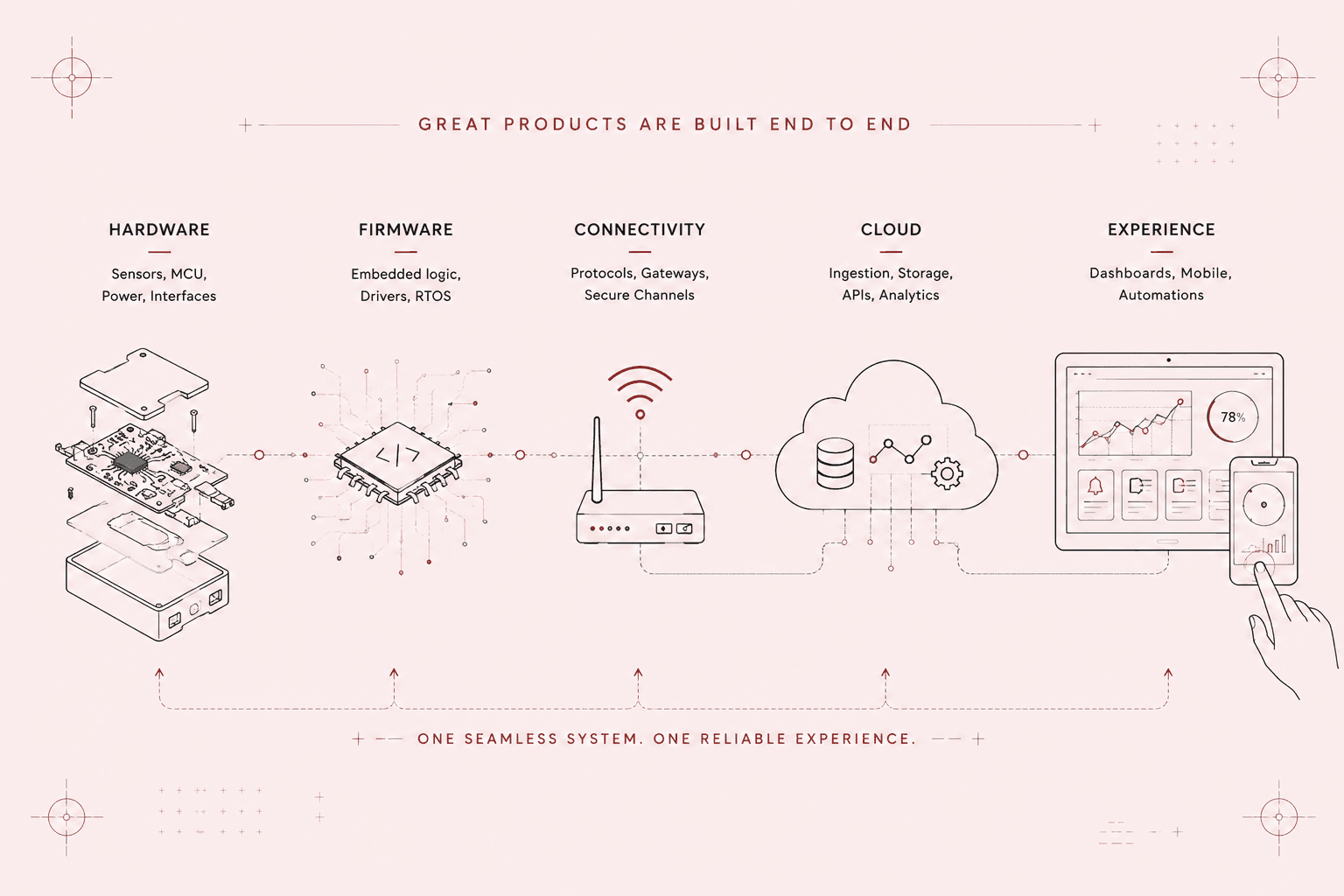
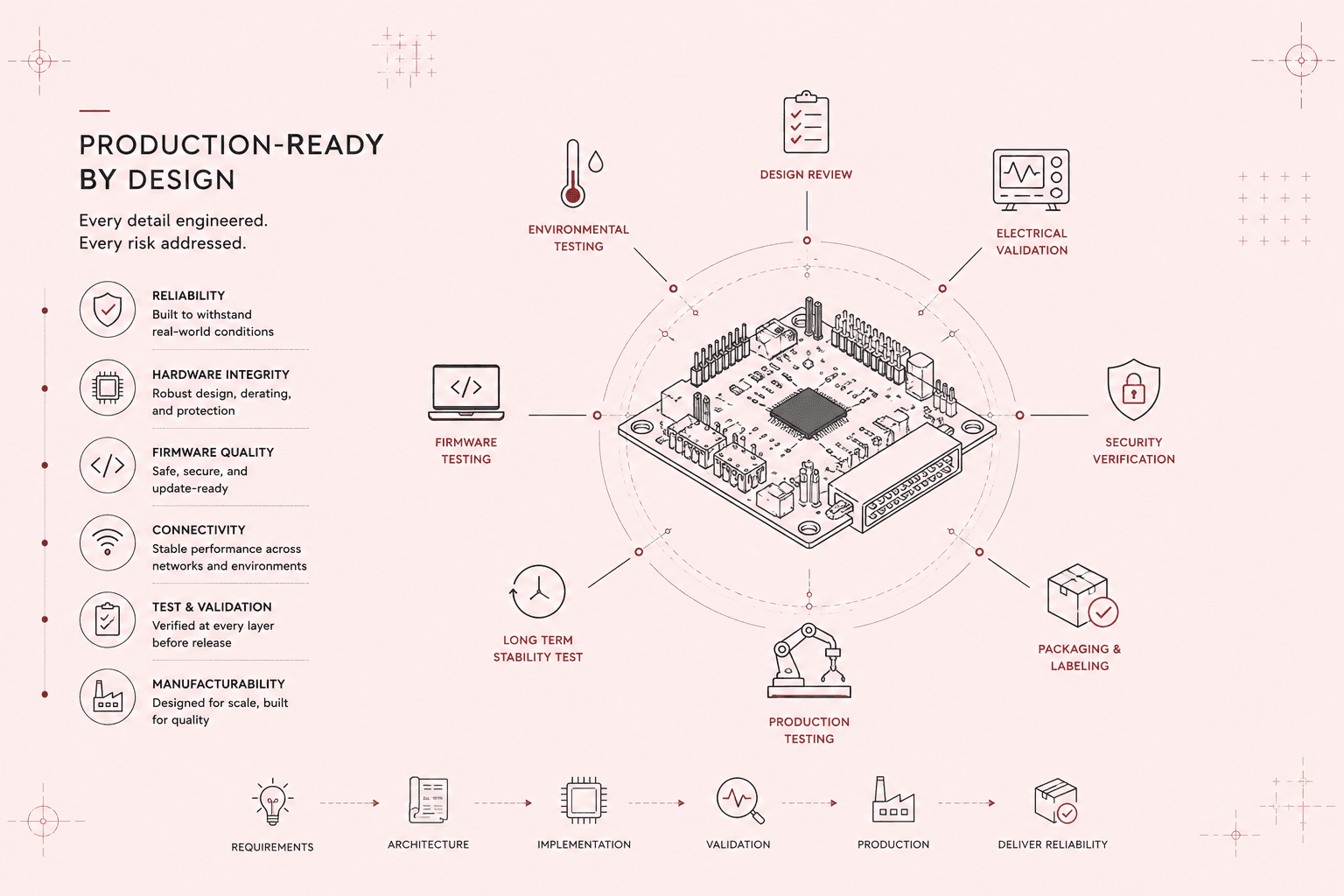
Dartwings is an Engineering Guidance Partner — not a software agency or IoT vendor. We guide disconnected technologies through architecture, execution, validation, and deployment until they become reliable, field-ready systems.
- SCOPEChallenge
- MAPArchitecture
- BUILDEngineering
- HARDENValidation
- LAUNCHDeployment
- LOCKPrecision Outcome
Continue Reading
Start Your Mission
Whether you have a defined technical spec or the seed of an idea, describe your engineering challenge and we will respond with a guided path to a validated outcome.