

What Makes an Embedded Product Production-Ready?
A stable lab build is not production readiness. Products become field-ready when manufacturing flows, secure identity, telemetry, and recovery paths are engineered before scale. This insight details the gates that separate demos from dependable deployments.
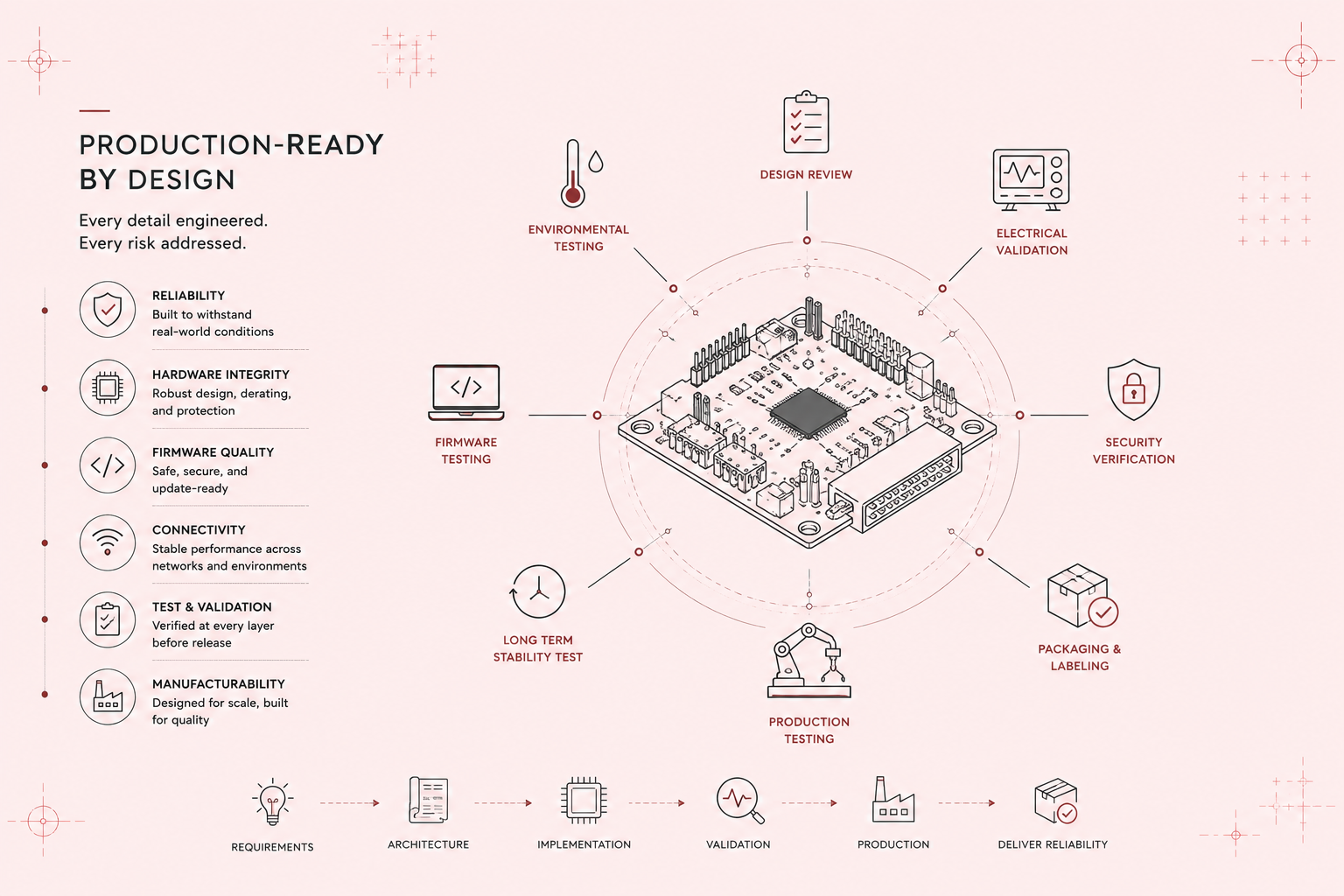
Passing bench tests feels like victory. Production readiness asks a harder question: can you manufacture, provision, monitor, and recover thousands of units you do not control?
Why This Matters
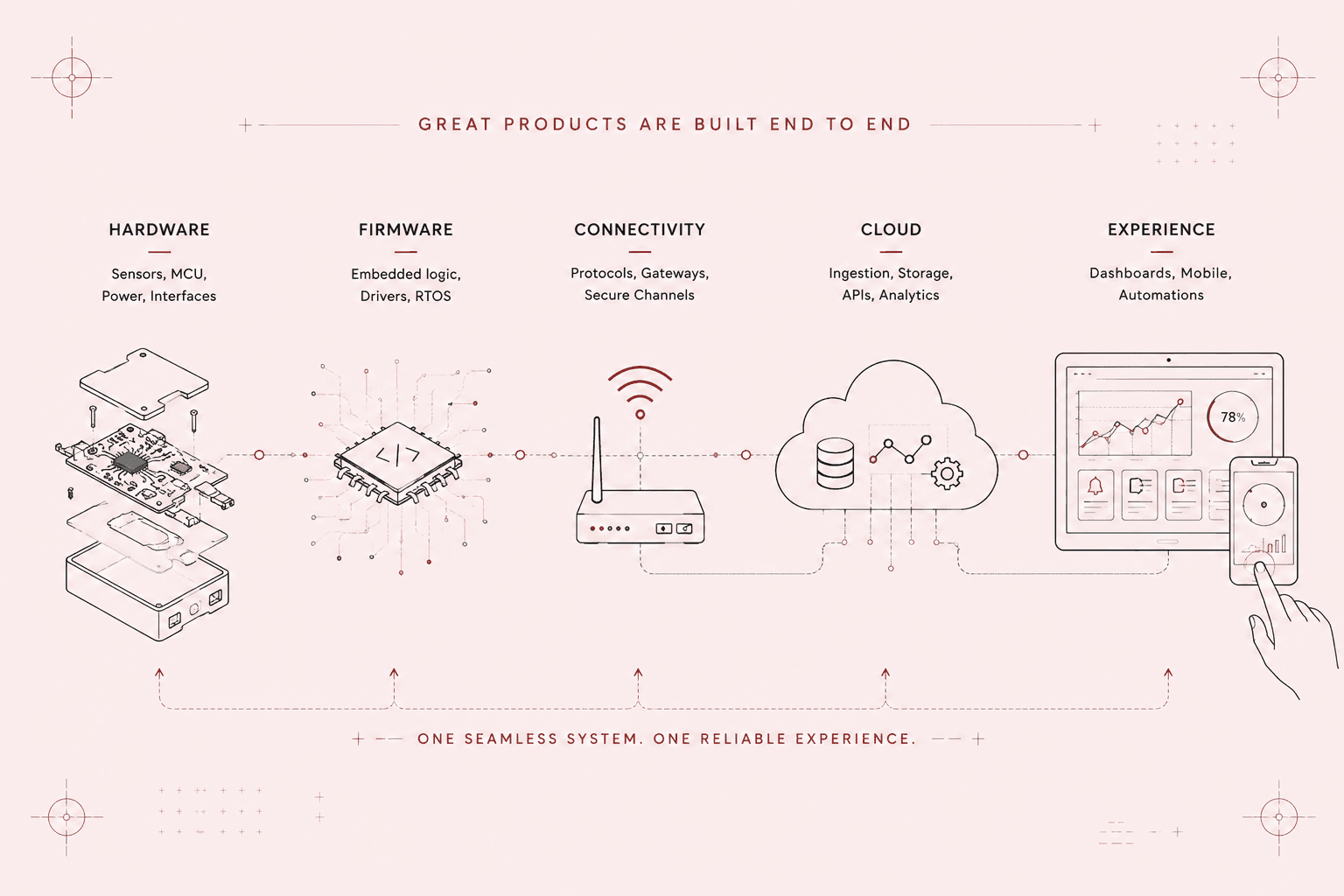
Production readiness is a systems milestone, not a firmware milestone. It spans device identity, manufacturing repeatability, fleet operations, and incident recovery.
Production readiness spans identity, manufacturing repeatability, fleet operations, and incident recovery — not just functional firmware.
The Problem Today
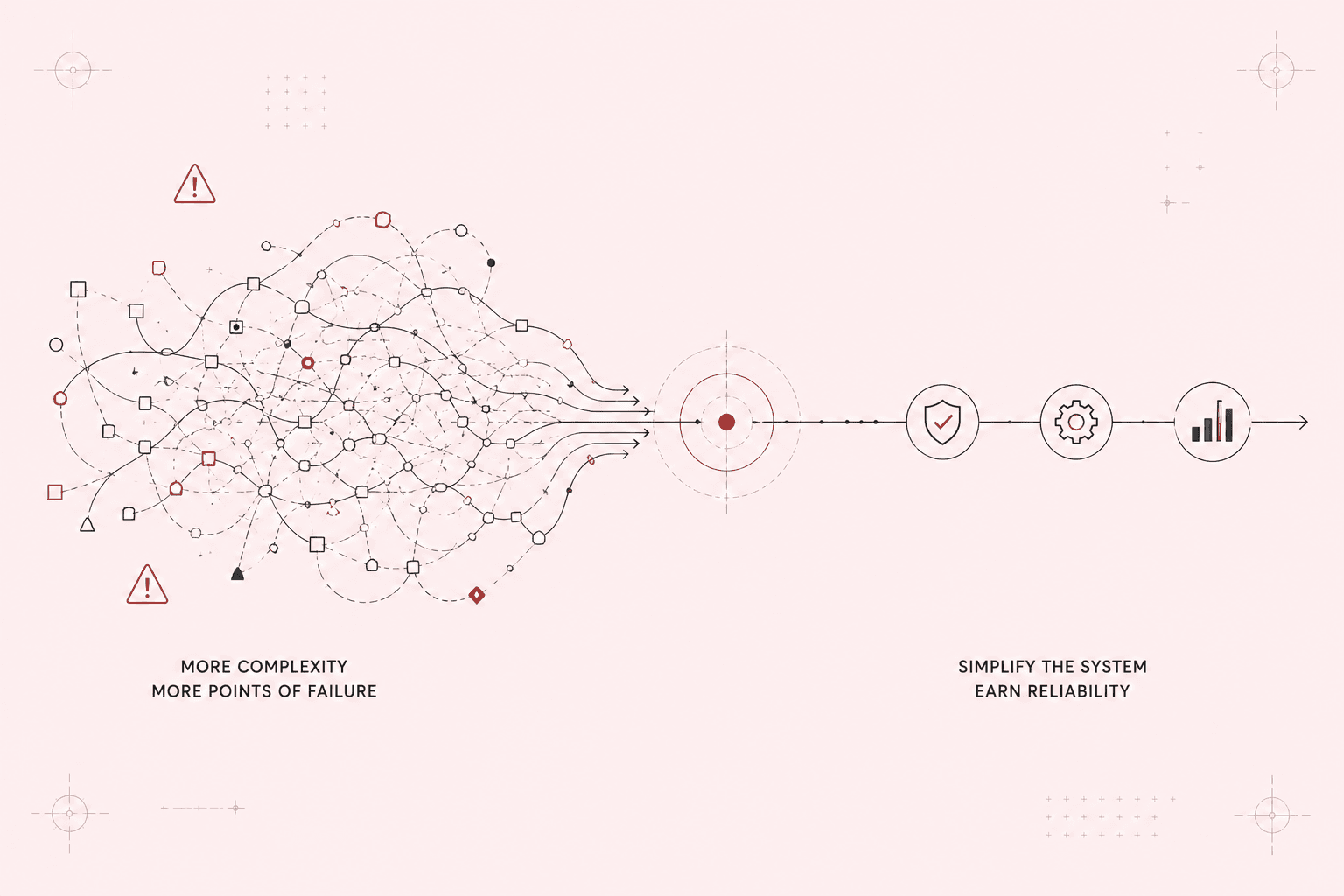
Teams often validate core functionality but postpone operational readiness. Manufacturing hooks, diagnostics, and secure lifecycle controls are deferred until scale pressure makes change expensive.
Operational readiness is deferred until scale pressure makes architectural change expensive and risky.
Where Systems Break
Provisioning, secure boot, calibration flows, serial-to-cloud binding, and telemetry taxonomy all need early architecture ownership. Missing any one of these creates downstream fragility.
Factory test hooks, calibration flows, and serial-to-cloud binding require early design — they cannot be bolted on at launch.
What Happens in the Field
At rollout, issues appear as inconsistent factory outcomes, hard-to-diagnose failures, and delayed support resolution due to missing observability and recovery controls.
Rollout issues appear as inconsistent factory outcomes, hard-to-diagnose failures, and support delays from missing observability.
How Experienced Teams Think
Experienced teams use explicit production gates with measurable criteria. They validate not only product behavior but also manufacturing, upgrade, and support behavior under realistic conditions.
Explicit production gates with measurable criteria separate demos from deployments that can be supported at scale.
Key Learnings
- Production readiness includes provisioning, logging, remote diagnostics, and secure boot paths.
- Manufacturing test hooks and calibration flows must be designed early — not bolted on at launch.
- Fleet observability defines whether you can support the product after day one.
Production Readiness as a Lifecycle Gate
Dartwings treats production readiness as a cross-functional milestone: secure identity, factory workflows, telemetry taxonomy, remote diagnostics, and OTA recovery must pass together before scale.
We align manufacturing, firmware, and cloud teams on measurable readiness criteria so launch quality is repeatable — not rediscovered under production pressure.
From Challenge to Precision Outcome
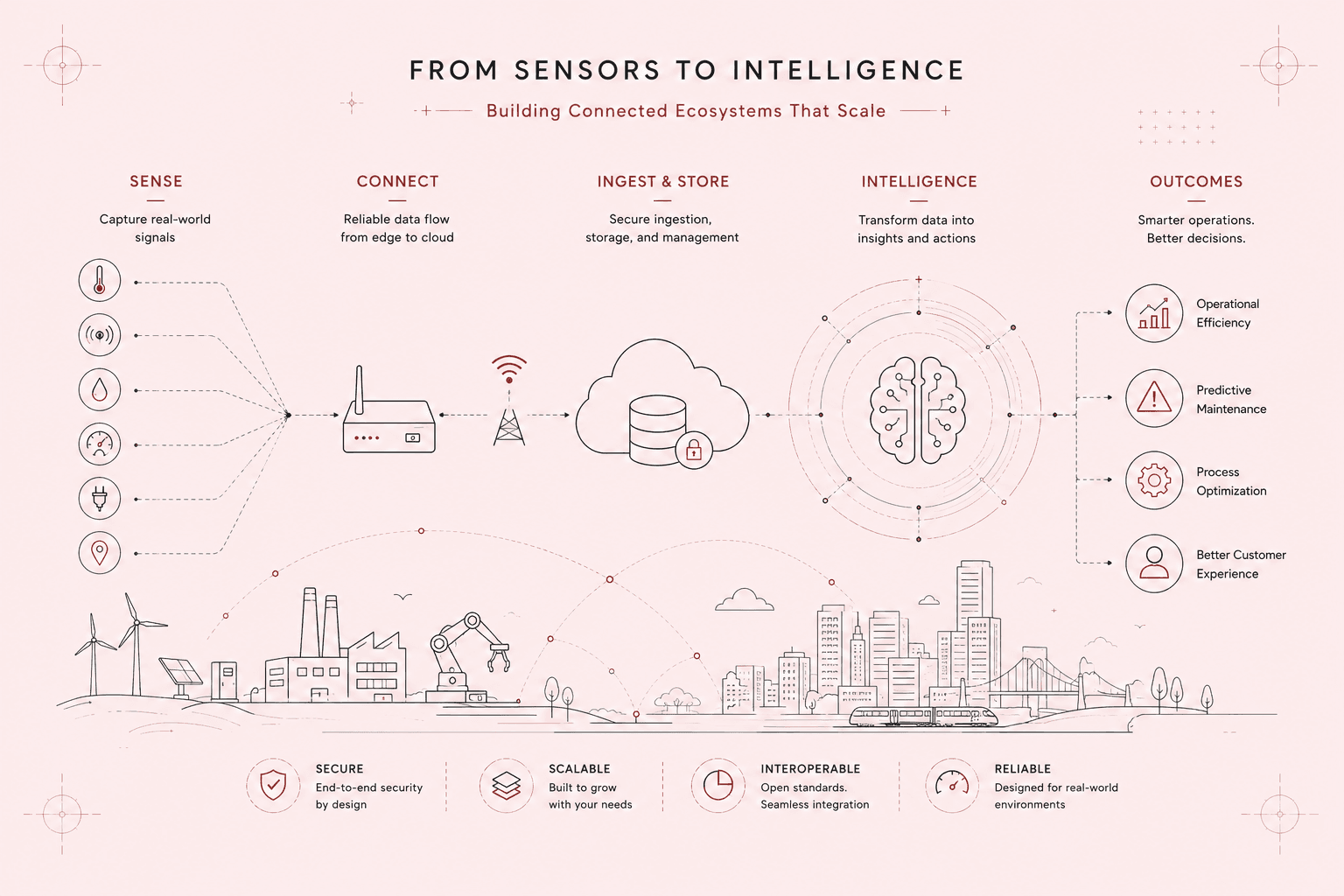
Dartwings is an Engineering Guidance Partner — not a software agency or IoT vendor. We guide disconnected technologies through architecture, execution, validation, and deployment until they become reliable, field-ready systems.
- SCOPEChallenge
- MAPArchitecture
- BUILDEngineering
- HARDENValidation
- LAUNCHDeployment
- LOCKPrecision Outcome
Continue Reading
Start Your Mission
Whether you have a defined technical spec or the seed of an idea, describe your engineering challenge and we will respond with a guided path to a validated outcome.