

The Cost of Fragmented Vendors in Modern Product Engineering
Vendor fragmentation rarely fails at kickoff; it fails during integration and post-deployment support. Coordination overhead, ambiguous ownership, and mismatched assumptions become a reliability tax. This insight examines that tax and the system-level alternative.
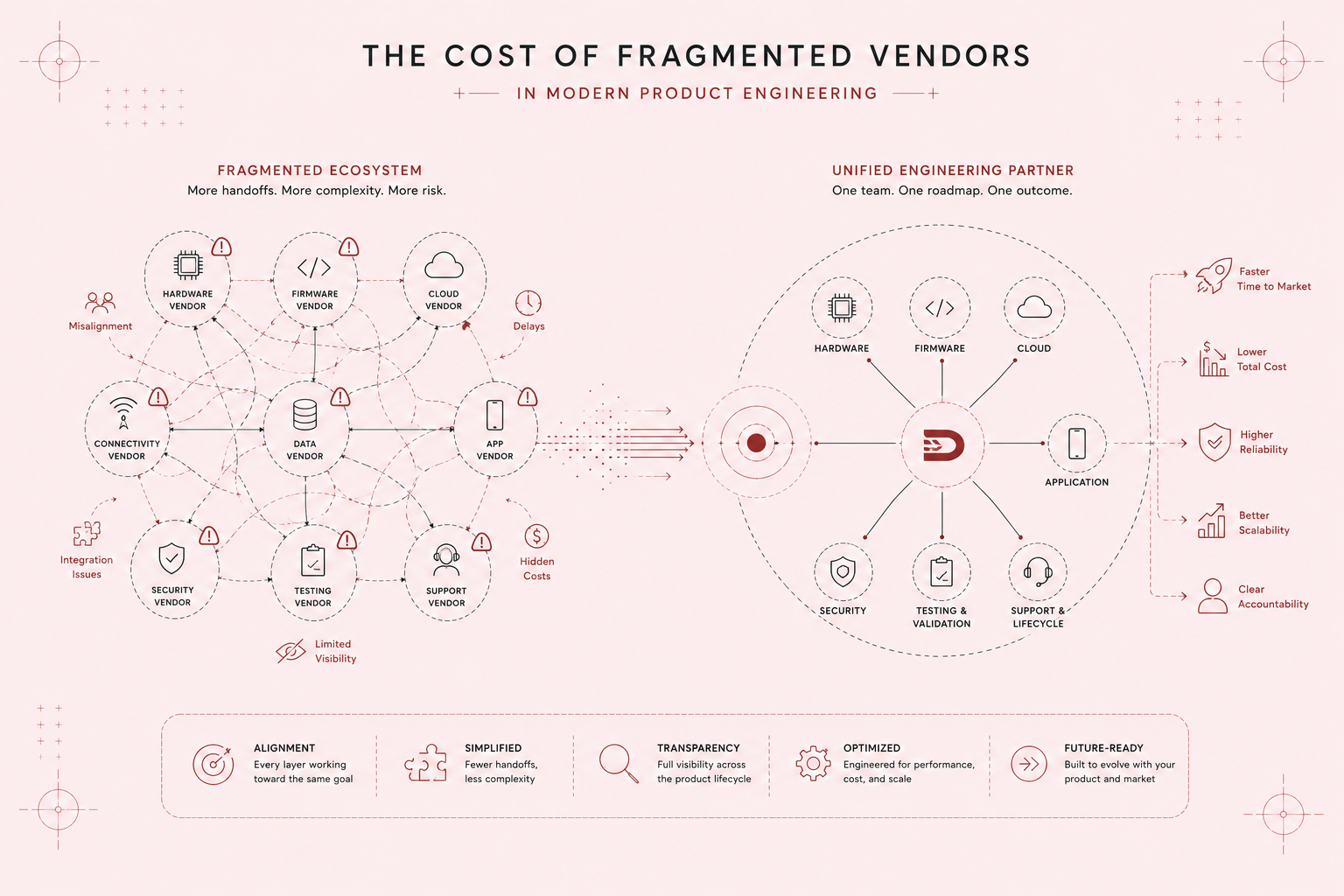
Splitting hardware, firmware, and cloud across vendors looks efficient in procurement. The product pays for that efficiency during integration, launch, and every support cycle after.
Why This Matters
Multi-vendor delivery can appear efficient during procurement, but system reliability is determined during integration and operation, not contracting.
Multi-vendor delivery optimizes procurement — but reliability is determined during integration and operation.
The Problem Today
When architecture ownership is split, accountability diffuses. Teams deliver artifacts, yet no single path exists for resolving cross-layer behavior issues quickly and conclusively.
Split architecture ownership diffuses accountability. Artifacts ship; system behavior remains unresolved.
Where Systems Break
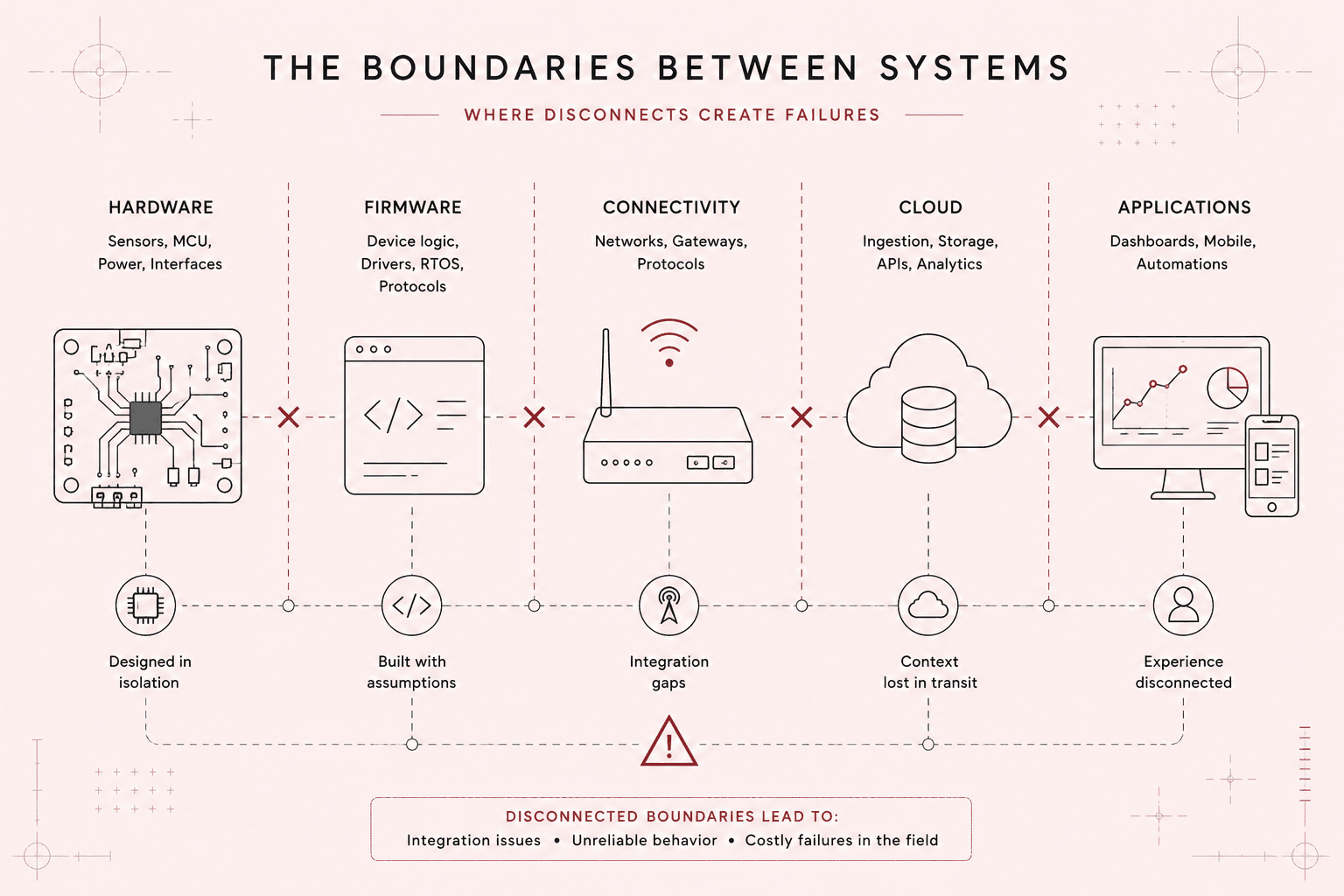
Each vendor introduces assumptions, interfaces, and release cadence misalignment. These seams become risk multipliers that are hard to detect until late integration or field incidents.
Each vendor introduces assumptions and release cadence misalignment that multiply risk at integration seams.
What Happens in the Field
The cost appears as schedule slip, repeated rework, and prolonged incident triage across organizational boundaries. Technical issues become governance issues before resolution.
Schedule slip, rework, and prolonged incident triage across organizational boundaries become the hidden cost of fragmentation.
How Experienced Teams Think
Resilient programs prioritize system coherence over component handoff. They establish unified architecture governance, shared reliability criteria, and clear escalation ownership from day one.
System coherence requires unified architecture governance, shared reliability criteria, and clear escalation ownership from day one.
Key Learnings
- Vendor boundaries often become product failure boundaries.
- Integration meetings are not a substitute for unified architecture.
- A single guidance partner reduces coordination overhead and accountability gaps.
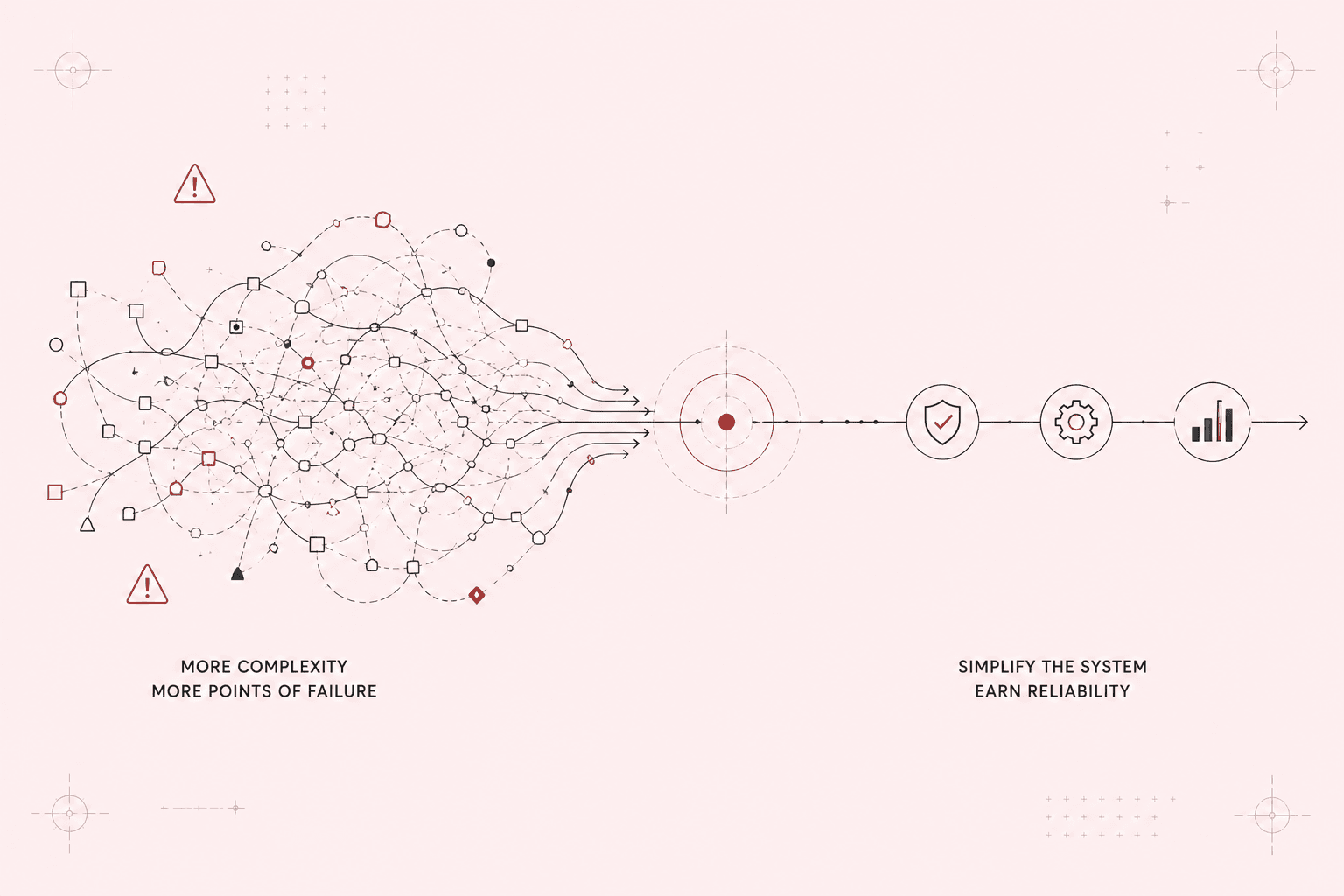
Converging Fragmented Delivery Into One System Path
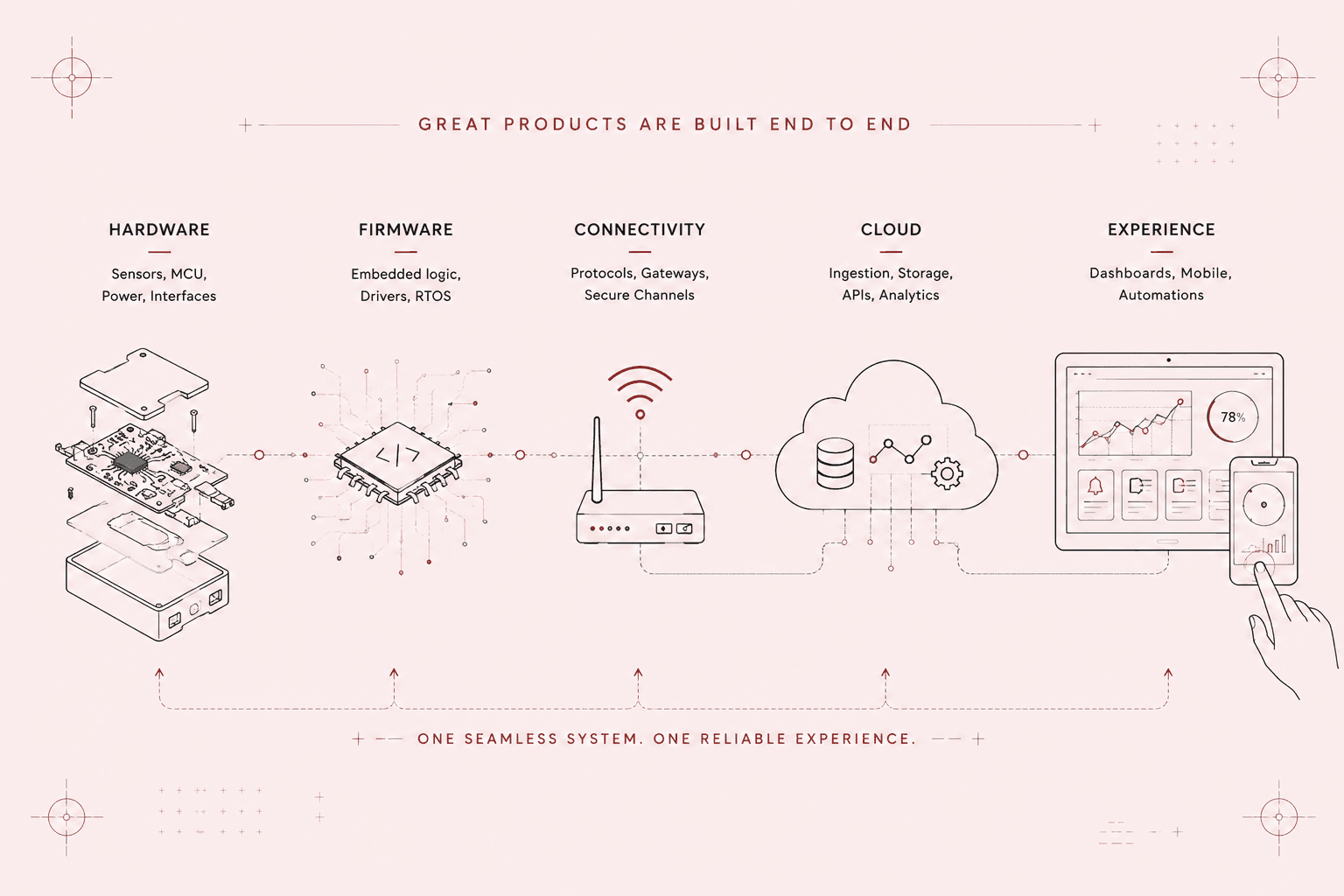
Dartwings reduces vendor fragmentation by owning the connective architecture across hardware, firmware, connectivity, cloud, and experience — so integration risk is managed, not outsourced.
Programs we guide replace handoff ambiguity with unified system intent, shared validation criteria, and one accountable path from challenge through deployment.
From Challenge to Precision Outcome
Dartwings is an Engineering Guidance Partner — not a software agency or IoT vendor. We guide disconnected technologies through architecture, execution, validation, and deployment until they become reliable, field-ready systems.
- SCOPEChallenge
- MAPArchitecture
- BUILDEngineering
- HARDENValidation
- LAUNCHDeployment
- LOCKPrecision Outcome
Continue Reading
Start Your Mission
Whether you have a defined technical spec or the seed of an idea, describe your engineering challenge and we will respond with a guided path to a validated outcome.